



If you’re lucky enough to celebrate your birthday in December, you have the choice of three amazing birthstones, which include Tanzanite, Turquoise and Zircon.
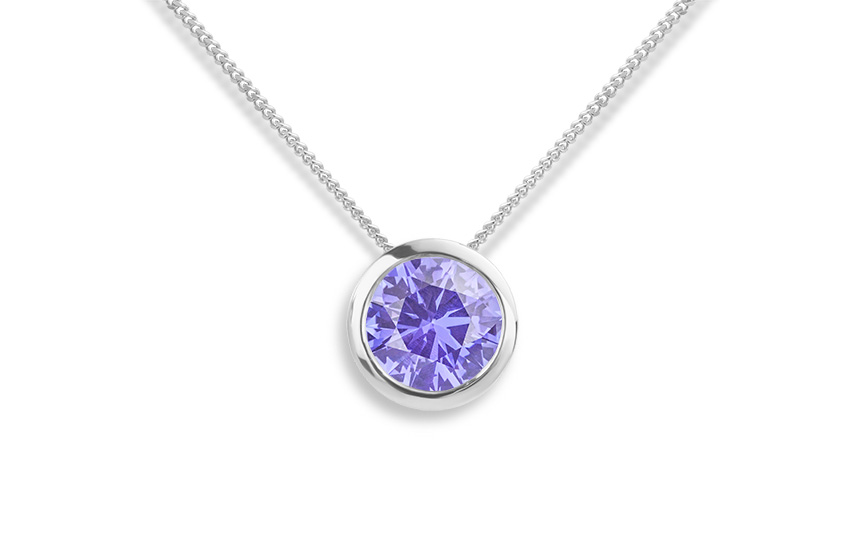
Within the Serendipity Diamonds showroom and workshop on the Isle of Wight, we create many jewellery designs each year. We create a wide variety of designs with all of the December birthstones. Jewellery includes ready-made items from our window and a vast array of bespoke designs created individually for clients.
Tanzanite – No.1 Choice of Birthstone for December
Tanzanite is the most popular birthstone choice for December. This luxurious gemstone captivates buyers with its incredible range of violet to blue tones.
But what is Tanzanite? Interestingly, this incredible gemstone is a variety of the mineral Zoisite. Tanzanite exists in a variety of shades ranging from blue to violetish blue.
The colouration occurs due to the presence of the element Vanadium within the mineral.
As the name suggests, Tanzanite originates from Tanzania—a gemstone prized for its amazing colour and rarity. Crystalline trichroism causes the violet colour to vary under different conditions.
When mined, most Tanzanite has a reddish-brown tinge, which is removed by heat treatment to enhance the gemstone’s prevailing blue-violet colour. For this reason, most Tanzanite is heat-treated to improve its colour.

The History and Origin of Tanzanite
Commonly known as the modern-day gemstone. Tanzanite was discovered as late as 1967 in Merelani Hills near Arusha, Tanzania, by Maasai herders. It is very close to the foothills of Mount Kilimanjaro. News spread quickly, and the government gave permission for mining to begin.
Initially, it was thought to be a sapphire mine. However, it was quickly identified by its crystal structure as a vibrant blue variety of zoisite, a mineral that had been around since the early 1800s.
Thereafter, Tanzanite grew in popularity as an affordable gemstone compared to sapphire.
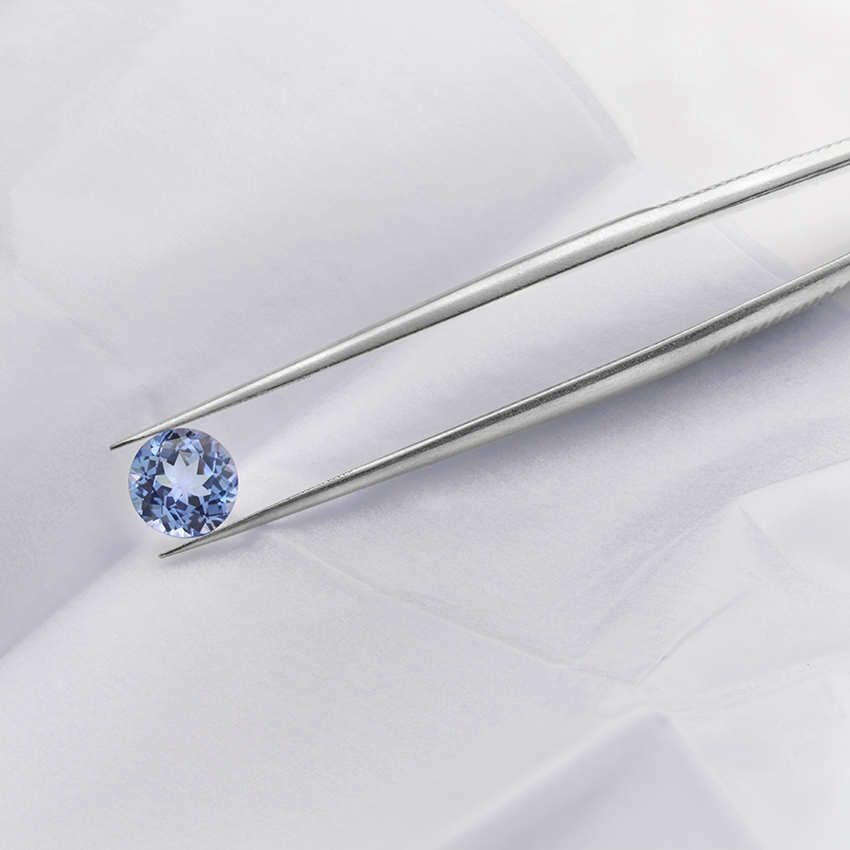
Example of a round Tanzanite showing the distinctive blue-violet colouration associated with this type of gemstone.
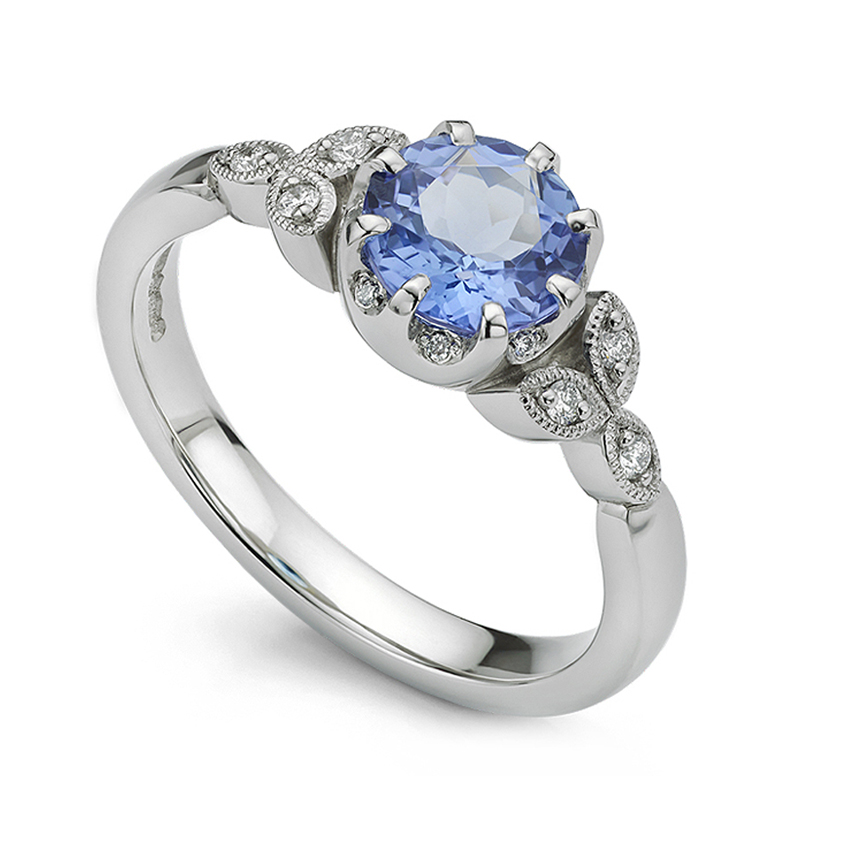
Our example ring comes from our bespoke jewellery service and was made in 950 Platinum. A one-of-a-kind Blue Tanzanite added contrast against small 1mm diamonds. The diamonds added incredible sparkle. Furthermore, the unique effect varied from other halo-style settings
Tanzanite was added to December’s birthstones as recently as 2002.
In fact, the name ‘Zoisite’ was avoided owing to a similarity to the word ‘suicide.’ For this reason, the name Tanzanite was used as a more appropriate name for this incredible gemstone.
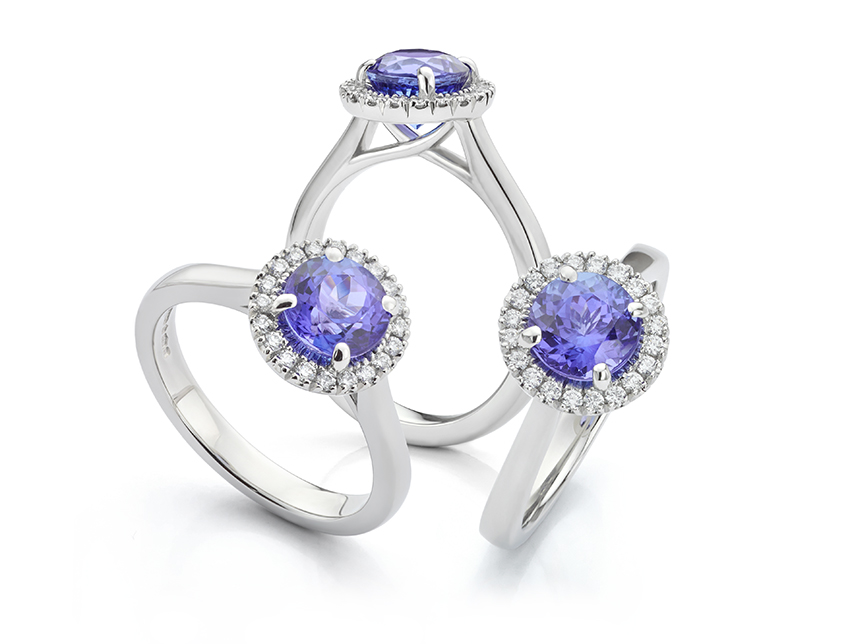
The Eleanor halo ring features an incredible blue Tanzanite surrounded by diamonds.
When it comes to jewellery designs, we recommend Tanzanite for both earrings and pendants. A Tanzanite engagement ring requires care during wear. This semi-fragile gemstone is more prone to damage than diamonds or sapphires. As a result, we never recommend this gemstone to clients who are worried about damaging their ring.
Turquoise is another popular December birthstone.

The opaque gemstone Turquoise differs from Tanzanite and Zircon. It originates from many sources worldwide, including Iran, Sinai, the United States and even China. In contrast, gemstones such as Tanzanite originate from just one source.
Turquoise gets its name from the 17th-century word meaning Turkish.
The colour of Turquoise varies from white to pale blue. However, most people associate Turquoise with distinctive blue-green colouration.
Historically, polished Turquoise features in both ancient and modern jewellery. For example, from ancient Egypt, we see Pharaonic treasures set with Turquoise.
Inexpensive Turquoise jewellery often features synthetic forms of this gemstone. For example, fashion jewellery set with synthetic varieties of Turquoise makes a popular and affordable accessory. As a result, we find Turquoise across jewellery priced very differently.
Available from our Showroom collection. Sterling silver teardrop Turquoise pendant and matching earrings available.
Owing to Turquoise’s opacity, Cabochon cuts are frequently used across jewellery styles. Most gemstones feature angular facets to reflect light. Conversely, Cabochon cuts have no aspects. In addition, they are typically domed with a flat base.
Measuring six on the Mohs scale, the hardness of Turquoise compares to glass. Turquoise often varies in colour, with characteristic dark flecks caused by limonite.
Zircon Gemstone
Zircon occurs in a variety of colours, including blue, yellow, orange and red. This transparent crystalline gemstone belongs to the mineral group of neosilicates.
Its name comes from the German word ‘Zirkon.’ This, in turn, comes from the Persian word ‘Zargun,’ meaning Gold-hued.
History and Origin
Zircon dates back more than 4.4 billion years and is considered the oldest mineral on Earth. Commonly found in sand and sedimentary deposits, as well as metamorphic rocks and crystallised magma.
Due to its chemical makeup, Zircon has endured geologic events such as erosion and pressure shifts over the ages.
Zircon contains the radioactive element uranium, which changes the gemstone’s chemical structure and colour over time, giving us important clues about the planet’s formation.
During the Middle Ages, people believed that zircon gemstones could induce sound sleep, ward off evil, and bring prosperity and wisdom.
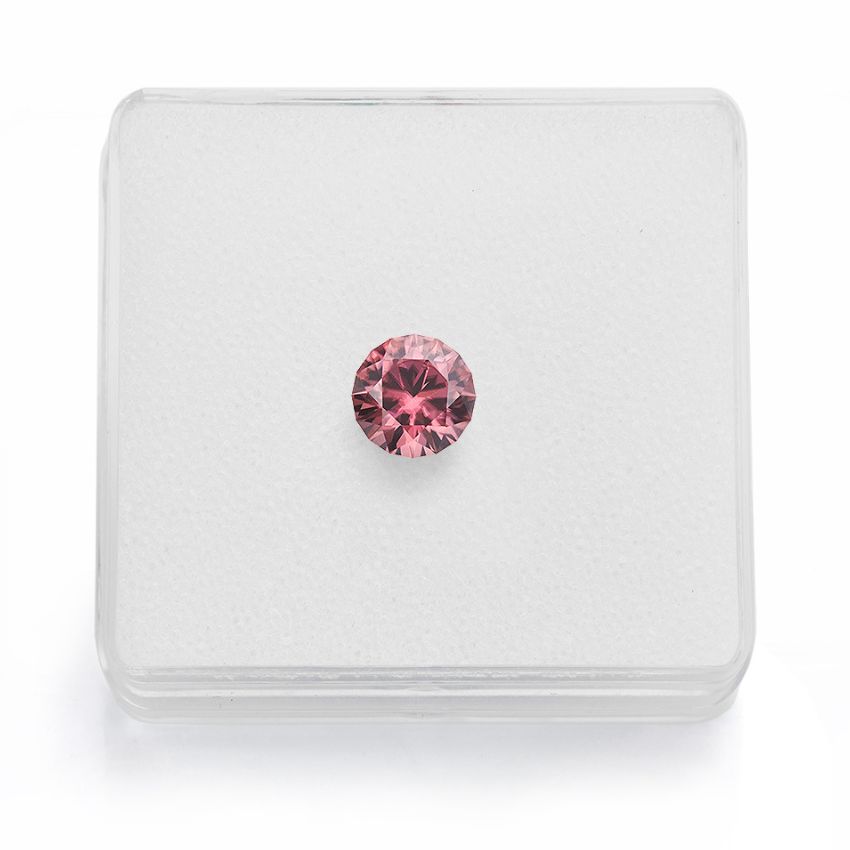
Pink Zircon – available to purchase as a loose stone or set and finished into an item of jewellery.
Blue zircon was popular during the Victorian era and was frequently used in jewellery from the 1880s. Zircon’s cloudy or smoky appearance was popular in mourning jewellery designs.
In the 1920s, heat treatment became the customary practice to enhance the colour of zircon gemstones for jewellery. Zircon has also been used in the decorative ceramics industry.
While Zircon is a popular gemstone among collectors for its range of colours, consumers seem most enamoured with the blue variety. I need clarification about the history and possibility of this expensive gemstone.
December Birthstone – Blue Zircon
Large Zircon crystals occur rarely in nature. Occasionally, we work with Blue Zircon. Moreover, we source each gemstone individually for each commission. Its beauty and rarity make it a sought-after gemstone, often requested by jewellery connoisseurs. In conclusion, it makes one of the rarer choices for December’s birthstone.
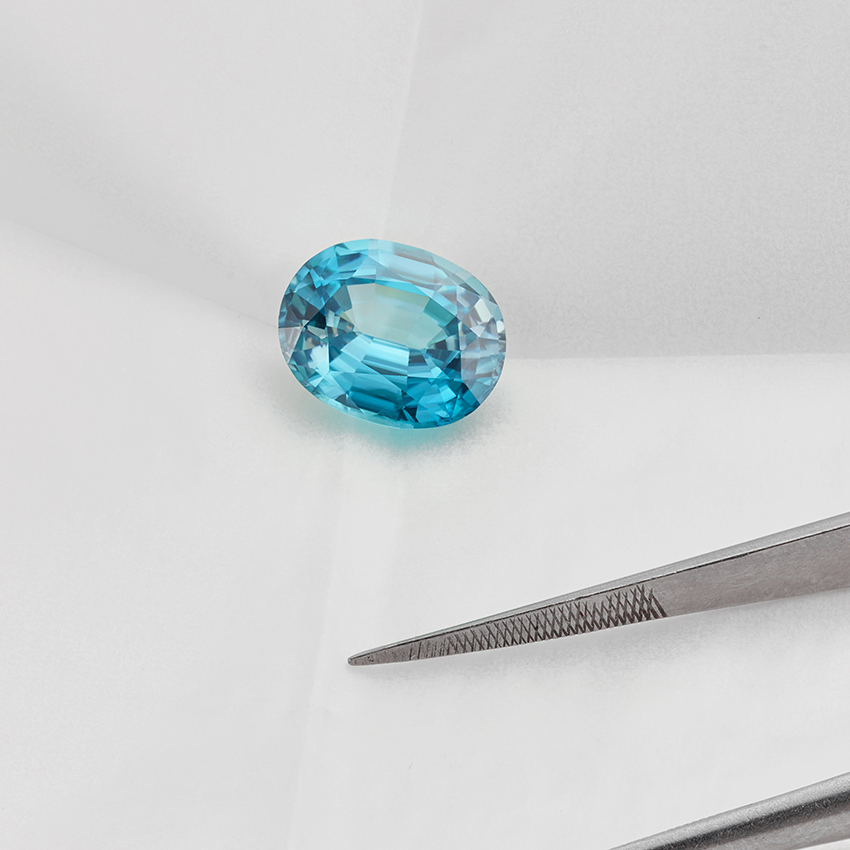
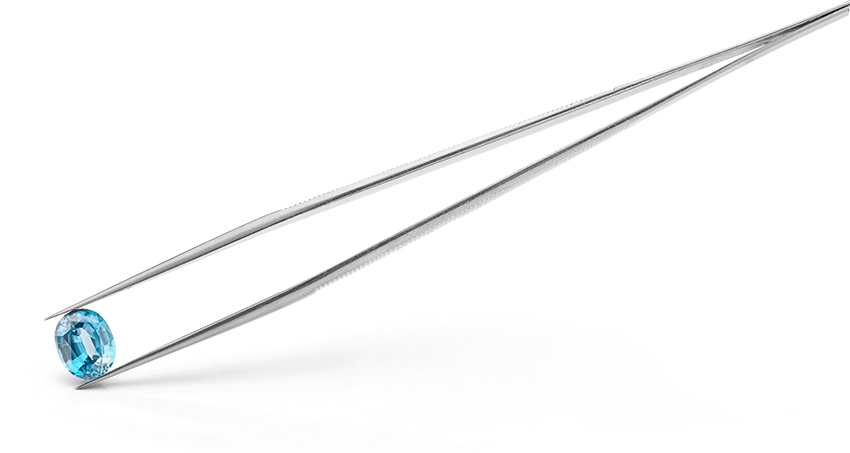
Close up of an Oval cut Blue Zircon
Blue Zircon Jewellery
One of the fabulous Blue Zircon rings created by our team featured the above gemstone set into a halo ring.
We handcrafted this bespoke ring design made from 18ct Yellow Gold. In addition, the ring featured natural white diamonds in the halo and along each shoulder.
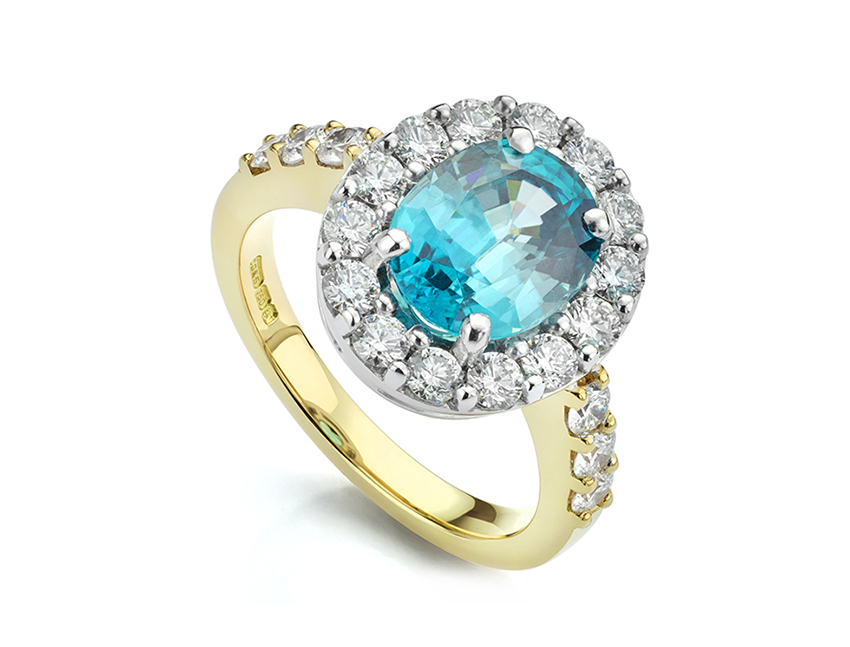
Blue Zircon and diamond halo ring handcrafted by our team at Serendipity Diamonds, made in 18ct Yellow Gold.
December Birthstone Gift Inspiration
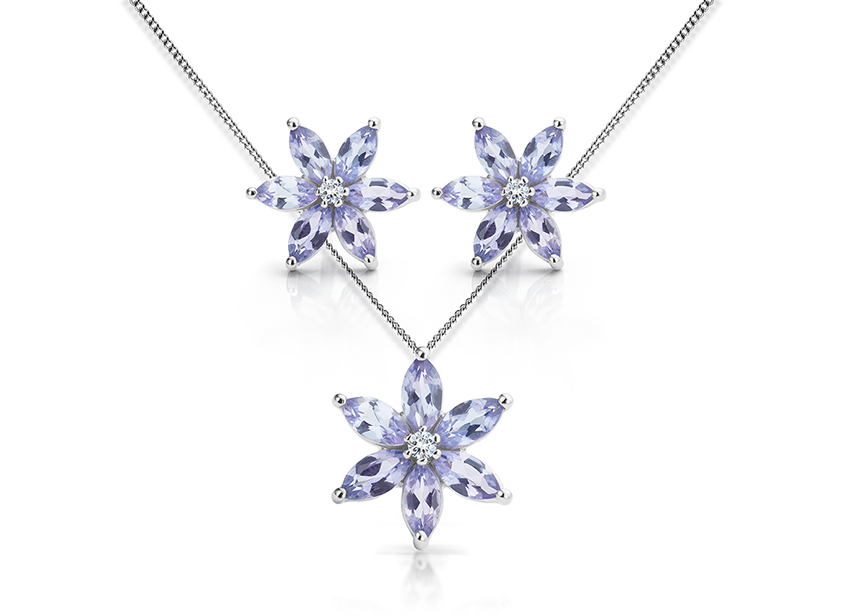
Recently, we added a brand new set of jewellery to our showroom collection. The Tanzanite flower earrings make a perfect gift for a December birthday. In addition, a matching Tanzanite necklace makes the perfect jewellery set for December’s birthstone.
Get in touch with us for further information, or visit our Ryde showroom to discover alternative gifts available.
Further help and guidance on December’s birthstone
Contact us for further help and guidance on any item of jewellery set with December’s birthstone choice. We provide a complete bespoke design service. This includes complimentary help and guidance with no obligation to purchase. Our team are on hand in our UK showroom to offer assistance Monday to Saturday.

About Mark Johnson
Mark founded Isle of Wight jewellers Serendipity Diamonds in 2007 after a career on the polished diamonds industry. Today he works in the Serendipity showroom, helping clients with jewellery, creating handmade designs and updating their two jewellery websites SerendipityDiamonds.com and Isle-of-Wight-Jewellery.co.uk