



If you’ve noticed a “375” stamp inside a ring or piece of jewellery, this guide explains exactly what it means, how it compares to other gold purities, and how to check if it’s genuine.
What Does 375 Mean on Gold? (Quick Answer)
A 375 gold stamp means the item is made from 9-carat gold, containing 37.5% pure gold and 62.5% alloy metals. It is the most common gold purity used in UK jewellery thanks to its strength, durability, and affordability.

Design from our showroom pre-loved jewellery designs available to view on our Isle-of-Wight jewellery website.
Understanding the 375 Gold Mark
The number 375 refers to the proportion of pure gold within the metal.
- 375 = 37.5% pure gold
- The remaining 62.5% is made up of strengthening alloys
- Equivalent to 9ct gold (9 parts gold out of 24)
This alloying process creates a more durable, scratch-resistant metal, ideal for everyday jewellery such as rings, chains, and bracelets. White gold versions are often rhodium-plated to enhance colour and surface finish, though this plating can wear over time.
How 375 Gold Compares to Other Gold Purities
Understanding how 375 compares helps buyers make better decisions:
- 375 (9ct gold) – Durable, affordable, lower gold content
- 585 (14ct gold) – Popular worldwide, higher gold content
- 750 (18ct gold) – Richer colour, higher value (see our guide to 750 gold stamps)
- 916 (22ct gold) – Very high gold content (learn more about 916 gold jewellery)
You’ll typically find 375 gold used across the UK, while higher purities are more common in premium or international jewellery markets.
Is a 375 Gold Stamp Trustworthy?
A 375 stamp is usually reliable—but context matters.
- UK hallmarked jewellery includes:
- A fineness mark (375)
- An Assay Office symbol (e.g., an anchor for Birmingham)
- A sponsor’s mark (maker’s initials)
- Some items may only show:
- “9ct”, “9k”, or “375” without a full hallmark
While this doesn’t automatically mean the item is fake, it’s important to be cautious.
Why caution matters:
- Simple stamps can be replicated
- Non-gold items are sometimes falsely marked
- Older or imported pieces may lack full UK hallmarking
Always buy from a reputable jeweller or have items professionally tested if unsure.
Common Hallmark Symbols Found with 375 Gold
A full UK hallmark often includes additional symbols alongside the 375 stamp:
- Anchor – Birmingham Assay Office
- Leopard’s Head – London
- Rose – Sheffield
- Castle – Edinburgh
The chart below shows the main UK assay office symbols alongside common gold purity marks such as 375, 585, 750 and 916.

You may also see:
- Sponsor’s mark – Identifies the maker (e.g. initials)
- Date letter – Indicates the year of hallmarking
These marks provide traceability and authenticity, making UK hallmarked jewellery some of the most trusted in the world.
Additional marks to denote 375 gold
Other giveaway marks often feature within 9ct gold jewellery. Such marks typically appear within the hallmark. For example, a crown represents gold.

Does 375 Gold Tarnish or Fade?
375 gold does not tarnish in the same way as base metals, but it can dull slightly over time due to the higher proportion of alloy metals. Regular cleaning and polishing will restore its shine, and white gold may require occasional re-plating with rhodium.
Why 375 Gold Is So Popular in the UK
375 gold remains a staple for several reasons:
- Strength – More resistant to wear than higher carat gold
- Affordability – Lower gold content keeps prices accessible
- Versatility – Ideal for everyday rings and jewellery
For many buyers, it offers the perfect balance between practicality and value.
Antique and Vintage 375 Gold Jewellery
Older pieces may look slightly different:
- Some feature “9ct” stamps only
- Others use traditional or worn hallmarks
- Certain antique pieces may lack modern markings entirely
In these cases, jewellers can:
- Perform acid testing
- Use XRF analysis
- Assess wear patterns and craftsmanship
Expert Insight from Serendipity Diamonds
At Serendipity Diamonds, we handle both modern and vintage gold jewellery daily, including 375, 750, 916 gold and higher purities.
From pre-owned signet rings to bespoke commissions, we regularly examine hallmarks to confirm authenticity, origin, and metal content—ensuring every piece meets expected standards.
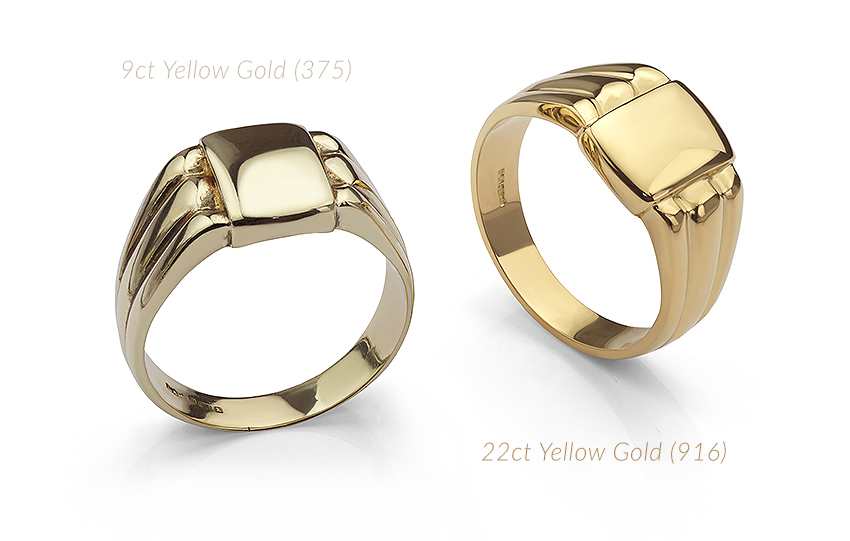
9ct Gold Gold Compared to 22 Carat Gold
9ct Yellow Gold pales in comparison to 22 carat Gold, quite literally. Owing to the whiter alloys present in 9 carat Gold, this metal choice appears lighter. In contrast 22 carat Gold has a richer, deeper saturation of gold colour as shown in our comparison photograph below.
Quick Buying Advice
- Look for a full UK hallmark where possible
- Be cautious of lightweight items with bold claims
- Compare weight vs price—gold value should feel realistic
- When in doubt, ask for professional verification
If you’re unsure about a hallmark, we’re always happy to examine jewellery in our showroom or advise online.
Frequently Asked Questions About 375 Gold
A 375 stamp means the item is made from 9-carat gold, containing 37.5% pure gold.
Yes. 375 is genuine gold and is one of the most common gold standards used in UK jewellery.
Yes. 375 and 9ct gold are the same standard.
Sometimes. A simple stamp can be copied, so always look for a full hallmark or ask a jeweller to test the item.
375 is 9ct gold, while 750 is 18ct gold. 750 contains more pure gold, but 375 is often better suited to everyday wear.
An anchor usually indicates the Birmingham Assay Office.

About Mark Johnson
Mark founded Isle of Wight jewellers Serendipity Diamonds in 2007 after a career in the polished diamonds industry. Today he works in the Serendipity showroom, helping clients with jewellery, creating handmade designs and updating their two jewellery websites SerendipityDiamonds.com and Isle-of-Wight-Jewellery.co.uk